
Exploring the World of Card Games
The Significance of Card Games in Culture and Entertainment
Card games have been an integral aspect of social entertainment for centuries, evolving from simple pastimes to sophisticated strategic challenges, and acquiring a special place in both casual and competitive gaming spheres. These games go beyond mere entertainment, providing lessons in strategy, mathematics, and psychology.
Historical Origins of Card Games
The roots of card games are widely believed to have originated in ancient China around the 9th century, developing from paper currency games. From China, they spread to India, Persia, and Egypt, eventually reaching Europe. By the 14th century, card games were widely popular across Europe.
Each region adapted card games to its cultural nuances, resulting in a diversity of games. The introduction of suits and the development of a standard deck with 52 cards are attributed to European influence, particularly from France where the suits of hearts, diamonds, clubs, and spades became standard.
The Anatomy of Card Games
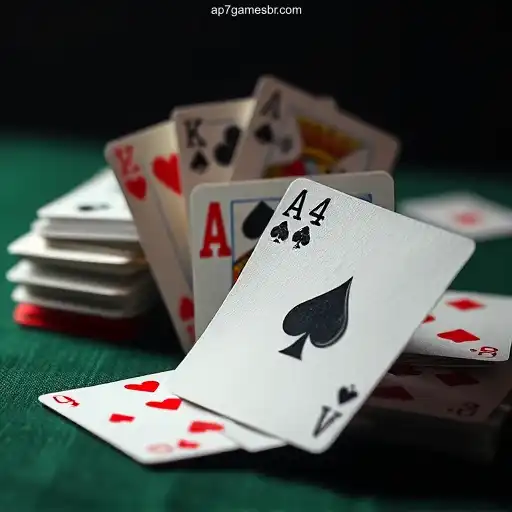
Card games generally consist of decks with a varying number of cards. The standard deck of 52 playing cards remains the most versatile, used in countless games around the world from Poker and Bridge to Solitaire. Most card games require players to aim for a specific combination of cards to win, with rules often dictating the skill needed for strategic playing.
Modern Variations and Innovations
In today’s digitized era, the rise of online platforms like ap7.games cassino online licenciado com 2.500+ jogos certificados, bônus R$ 5.000🍀 offers players unprecedented access to diverse card games. These platforms provide both classic card games and innovative new versions that can accommodate a wide array of gaming preferences, continuously expanding the universe of card games.
Types of Card Games
Card games are generally classified into several categories based on their style and play techniques. Here are some popular types:
Trick-Taking Games
These games involve players winning a number of "tricks" or hands of trick cards, with examples being Bridge, Spades, and Hearts.
Matching Games
In these games, players match cards according to specific rules. Rummy and Mah-jongg fall into this category. The objective is typically to form sets or sequences.
Shedding Games
Games like Crazy Eights and Uno fall under this category where players aim to be the first to discard all their cards.
Accumulating Games
Solitaire is a popular example, where the player seeks to accumulate all cards into sorted sequences.
Comparing Games
For these games, typical examples include Poker and Blackjack, where hands are compared against each other rather than against fixed rules.
Strategic Depth in Card Games
The allure of card games often lies in their strategic depth. Mastering a card game often involves not just understanding the rules but also reading other players, calculating odds, and adapting to dynamic circumstances. Games like Poker are as much about psychology as they are about card mechanics.
The Online Evolution of Card Games
With the growth of internet connectivity, online platforms have revolutionized card games accessibility. Platforms like ap7.games cassino online licenciado com 2.500+ jogos certificados, bônus R$ 5.000🍀 cater to a global audience, creating communities where players can connect, compete, and hone their skills.
The Cultural Impact of Card Games
Card games have not only thrived as popular leisure activities but have shaped social interactions across cultures. From family game nights to professional tournaments with enormous stakes, their influence extends far and wide. They serve as a mirror reflecting both the complexities and simplicities of human nature.
The Future of Card Games
Card games continue to evolve, incorporating elements of technology, virtual reality, and artificial intelligence. The future may see even more creative adaptations that draw from traditional formats while embracing modern innovations.